Every September, National Preparedness Month creates an opportunity to evaluate how ready we are for the emergencies and disruptions that may lie ahead. For utilities, however, preparedness cannot be limited to one month on the calendar. It is a year-round commitment built through planning, training, exercising, communication, and strong working relationships.
Utilities provide essential services that communities depend on every day. During an emergency, the ability to maintain or quickly restore those services depends on decisions made long before an incident occurs.
A Prepared Workforce Strengthens Community Response
Organizational preparedness begins with people. Employees who understand their responsibilities—and who know their own households are prepared—are better positioned to support their organizations and communities during an extended response.
Preparedness should account not only for infrastructure and equipment, but also for staffing, rest, food, family needs, communication, and the conditions employees may face while reporting for duty.
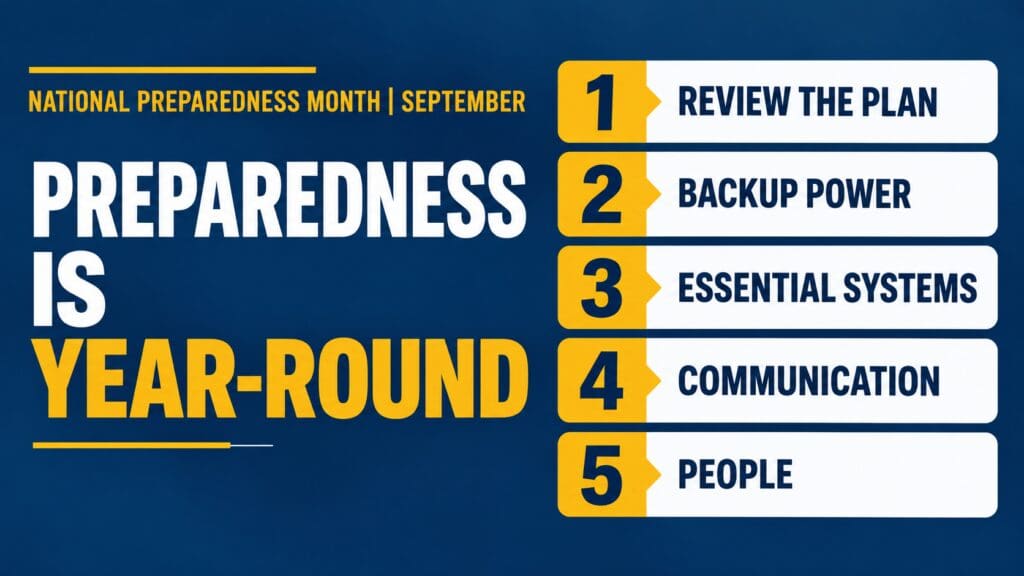
Five areas can provide a practical starting point for reviewing organizational readiness:
1. Review the Plan
Emergency response and continuity plans should be reviewed regularly, not stored away until they are needed. Confirm activation procedures, decision-making authority, staff responsibilities, contact information, and the process for requesting additional support.
Everyone involved should understand what is expected of them and how their role connects to the larger response.
2. Test Backup Power
Backup power is only useful if it works when the primary power supply fails. Test generators and related equipment regularly, verify which facilities and systems they can support, and maintain plans for fuel storage and resupply during an extended outage.
Utilities should also consider how regional disruptions could affect fuel availability, transportation, vendors, and access to critical facilities.
3. Identify Essential Systems
Determine which systems must remain operational and which services can be temporarily reduced. Consider critical dependencies such as electricity, telecommunications, fuel, water, wastewater, transportation, sanitation, cooling, and facility access.
Understanding these connections before an emergency helps organizations prioritize resources and develop alternatives when normal systems are unavailable.
4. Strengthen Communication
Emergencies often disrupt the communication tools we rely on most. Maintain current contact lists and establish backup methods for communicating with employees, leadership, partner agencies, vendors, and mutual assistance organizations.
Clear communication protocols help reduce confusion, improve situational awareness, and ensure resource needs can be identified and shared quickly.
5. Prepare and Support People
Extended emergencies require sustainable staffing plans. Consider shift coverage, rest periods, food, lodging, transportation, and employee family needs.
Encouraging household preparedness is also part of building organizational resilience. Employees who have plans for their families, pets, medications, transportation, and communication are better equipped to fulfill their response responsibilities.
From Prepared Plans to Prepared Partnerships
No utility responds to a major emergency alone. Effective response depends on trusted relationships, shared expectations, and the ability to coordinate across organizations and sectors.
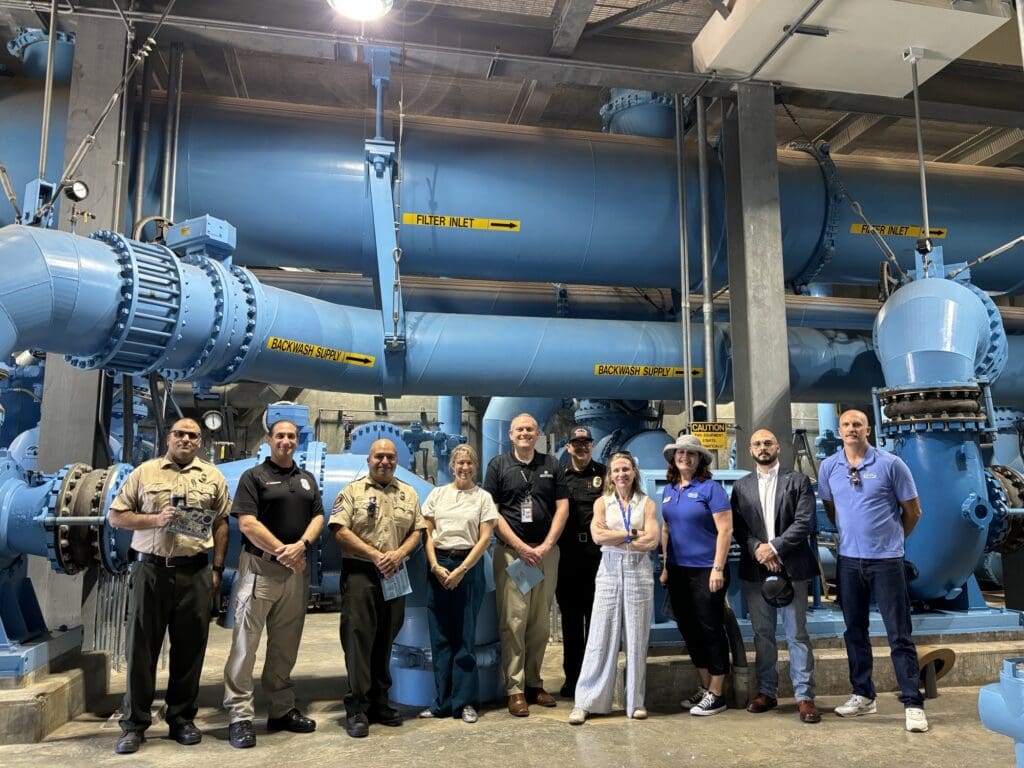
Throughout the year, CUEA helps strengthen these connections by bringing utilities and emergency-response partners together, supporting mutual assistance coordination, and creating opportunities to plan, communicate, and exercise before an emergency occurs.
National Preparedness Month is a valuable reminder—but readiness is built through the work we do every day.
This September, choose one plan to review, one system to test, and one partner to reconnect with. Small actions taken now can make a significant difference when our communities need us most.